

Energy Is About Stability, Not Stimulation: Dr. Andrew Jagim on Sleep, Hydration and Recovery
5 min readEditor's note: This article summarizes what Dr. Andrew Jagim PhD shared in an interview on the Feel More Energy podcast. These are the guest's own views and experiences, not established facts or absolute truths, and Feel More Energy has not independently verified every claim. Nothing here is medical advice.
Most people think low energy means they need more caffeine. Dr. Andrew Jagim, a researcher and performance scientist at the Mayo Clinic, sees it differently: energy is not about stimulation. It is about stability.
Performance rarely breaks down in one place. It breaks down across several systems at once: sleep, training quality, nutrition and hydration all feed the same outcome. Address all of them, and energy stops being something you chase. It becomes something you sustain.
Start with sleep
Sleep is the single most impactful performance factor most people ignore. For most adults, the target is 7 to 9 hours a night. What helps most:
- A cool, dark and quiet room
- A consistent sleep and wake schedule
- No screens in the hour before bed
- A wind-down routine: stretching, meditation or a warm bath
Poor sleep raises stress hormones, lowers heart rate variability and undermines everything you built in training.
Creatine: a cellular energy tool
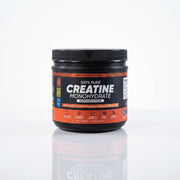
Creatine increases the energy-producing capacity of every cell, not just muscle. When a cell has more energy, it does its job better, whether that job is sprinting, lifting, thinking or recovering. That is why there is growing consensus among researchers that creatine may come to be seen as a conditionally essential nutrient.
How it works over time
Creatine saturates muscle with phosphocreatine, so cells can produce energy faster during high-intensity effort. It takes 3 to 4 weeks of consistent daily use to see meaningful changes, or 5 to 7 days with a loading protocol.
Dr. Jagim puts it in practical terms: if you were doing 8 reps before, after a few weeks you might do 10 or 12. Across a full training cycle, those extra reps add up to real gains. And if you miss a dose, don't worry: levels take weeks to return to baseline.
Who benefits most
Vegans and vegetarians get almost no creatine from food, so the improvement from supplementing is proportionally larger. Getting 5 g a day from food alone would mean eating close to two pounds of lean meat daily.
Dose and timing
| Goal | Daily dose |
|---|---|
| General health | 2–3 g |
| Athletic performance | ~5 g |
| Brain and cognitive support | ~10 g |
Loading is optional: 20 g a day split into four doses for 5–7 days, then maintenance. Consistency matters more than timing, although post-workout may offer a slight edge. Caffeine and creatine work through entirely different mechanisms and may even complement each other.
Creatine and hydration
For years, people believed creatine dehydrated you. The research Dr. Jagim discusses says the opposite: it helps maintain total body water and improves hydration inside the cell. Studies following athletes over a full season found lower rates of cramping and dehydration-related illness in those who took creatine.
Creatine is not a substitute for drinking water, though. Most adults need 3 to 4 liters a day, and athletes training in the heat may need double. Pale yellow urine is the simplest check.
The electrolytes that actually matter
Most hydration products focus on sodium. But for people who eat a lot of processed food, sodium usually isn't the problem: they already get plenty. The electrolytes most often low are:
- Potassium, which supports muscle function and fluid balance
- Magnesium, involved in hundreds of metabolic pathways
A food-first approach works best, with supplements filling the gaps. And sugar in a sports drink during exercise isn't the enemy: in that context it is one of the most useful ingredients. Outside of training, choose the sugar-free version.
Reading your HRV
Heart rate variability measures the variation between heartbeats and reflects the balance between your stress and recovery systems. A higher trend means you are well recovered. A lower trend can mean stress, overtraining or an oncoming illness.
A dip during a hard training block is normal: it means your body is adapting. Watch the trend over weeks, not the reading of a single day. Deep diaphragmatic breathing, meditation, sauna or a warm bath and a consistent sleep schedule all help bring the body into recovery mode.
The takeaway
Sleep is the most impactful change most people can make, so start there. Then cover the basics every day: eat well, hydrate, take care of potassium and magnesium, and be consistent with creatine. Consistency beats optimization.
The Feel More Energy podcast · Episode 2
Building Resilient Energy is the free 14-page playbook from this episode, including a myth-versus-fact guide and five research references.

Disclaimer: The statements in this article reflect the opinions and experience of the guest, Dr. Andrew Jagim PhD, as expressed during an interview on the Feel More Energy podcast. They are shared for informational and educational purposes only. They are not absolute truths, they do not represent the views of Feel More Energy, and they have not been independently verified or evaluated by the U.S. Food and Drug Administration. This content is not medical advice and is not intended to diagnose, treat, cure or prevent any disease. Always consult a qualified healthcare professional before making changes to your diet, supplements, training or medical care.