


Creatine: Where Energy, Brain Power, and Aging Align
For years, I genuinely believed creatine supplements came from various animal proteins — the same foods most high-performing people have leaned on forever.
Creatine is found in meat, so it made sense to assume creatine supplements came from meat.
But once I learned the real story, everything changed — not just my understanding of creatine, but my entire understanding of human energy at the cellular level.
Creatine & ATP: The Real Source of Human Energy
Creatine’s discovery goes back to 1832, but the real breakthrough came later, when scientists realized creatine fuels your ATP energy system — the molecule your body uses for almost everything:
- Thinking
- Moving
- Repairing
- Recovering
- Breathing
- Contracting muscle
- Handling stress
- Powering your brain
ATP (adenosine triphosphate) is the currency of life — the coin your cells spend every second. It’s the primary molecule your body uses to create and transfer energy at the cellular level. Creatine is what helps your body regenerate ATP faster and more efficiently. So when I say creatine is human energy — amplified, I mean it literally. With enough creatine, your cells can produce:
- More energy
- More clarity
- More strength
- More focus
- More endurance
- More resilience
More you.
Where Creatine Actually Comes From?
Here’s where most people get it wrong. You do not get creatine supplements from meat. You do not extract creatine powder from cows, fish, or any animal. Creatine powder is scientifically synthesized to be chemically identical to the creatine your body already produces naturally. Your body makes about 1–2 grams per day. Your diet adds around 1 gram more. But the performance, cognition, and recovery benefits you read about in clinical studies come from intakes of 3–5 grams per day — not 1–2.
More than 700 studies confirm creatine’s impact across strength, brain function, mood, cellular energy, and healthy aging.
Creatine isn’t a gym trend.
Creatine isn’t hype.
Creatine is biology — built for human performance.
How Much Creatine You’d Need From Food?
To reach the clinically supported 5 grams per day, you’d need ONE of the following:
- 2–2.5 lbs of steak
- 3 lbs of chicken
- 1.5 lbs of salmon
- 4+ lbs of most white fish
- Around 250 eggs
To be crystal clear:
These numbers are not combined. Each line is one single option you’d need to eat every day just to hit 5 grams of creatine from food alone. Most people don’t have the appetite — or the budget, or the time — to do that.
Realistically:
- The cost is high
- The time is impractical
- The digestion is brutal
- The daily consistency is almost impossible
This is why almost everyone walks around not technically “deficient,” but underpowered.
How Much Creatine Your Body Actually Needs
Your body uses 1–3 grams of creatine every day just to power:
- Your muscles
- Your brain
- Your nervous system
- Your metabolism
- Your recovery
- Your cellular hydration
- Your ATP production
You produce 1–2 grams, and diet adds roughly 1 gram. So most people sit at 2–3 grams total — enough to function, but not enough to be fully optimized.
You’re not clinically deficient…but your system is never operating at full capacity.
A better way to say it:
You’re living life with your internal battery stuck at 50–60% — no matter how hard you try to recharge.
The sweet spot for strength, cognition, mood, and daily energy? 3–5 grams of creatine per day, consistently.
Problems Caused by Low Creatine Levels
Low creatine → low phosphocreatine → low ATP regeneration → low cellular performance.
Here’s how that shows up in real life:
- Faster Fatigue – you gas out quicker than you should.
- Reduced Strength & Power – lifts feel heavier, explosiveness drops.
- Slower Recovery – soreness lingers, you don’t bounce back as fast.
- Brain Fog – mental sharpness fades quicker, focus breaks faster.
- Lower Stress Tolerance – it’s harder to stay calm and grounded.
- Mood Dips – you feel more drained, flat, and unmotivated.
- Slower Metabolism – fewer calories burned, less metabolic drive.
- Accelerated Muscle Loss With Age – sarcopenia speeds up.
- Poor Cellular Hydration – muscles feel “flat,” recovery feels off.
Most people write these off as aging, stress, or “how life is now”… but many of these patterns are also linked to low creatine availability.
Top Benefits of Creatine
Now the good part — what happens when creatine is optimized. Creatine supports both engines that drive your life: muscle and brain.
- Increased Strength & Power – heavier lifts, more reps, more performance.
- Faster Muscle Growth – better training volume and muscle protein synthesis.
- Higher Daily Energy – more ATP available for both physical and mental effort.
- Better Cognition & Memory – improved working memory, learning, and focus.
- Improved Mood & Stress Resilience – more stable energy, better emotional buffer.
- Protection Against Age-Related Muscle Loss – supports strength and mobility as you age.
- Faster Recovery – reduced soreness, faster bounce-back between sessions.
- Enhanced High-Intensity Performance – sprinting, HIIT, combat sports, explosive training.
- Superior Cellular Hydration – fuller, better-hydrated muscles and tissues.
- Better Metabolic Function – supports insulin sensitivity and mitochondrial performance.
- Major Benefits for Vegans & Vegetarians – who get almost no creatine from diet.
- Long-Term Safety – one of the most studied and safest supplements ever.
Who Creatine Is For
Creatine isn’t just for bodybuilders. It’s for anyone who cares about energy, clarity, performance, and aging well.
- Men – strength, energy, performance, body composition, mental drive.
- Women – mood, cognition, bone density, lean muscle, metabolic health.
- Non-Athletes – daily energy, focus, resilience, and brain performance.
- Adults 50–80+ – strength, mobility, balance, muscle preservation, and cognition.
- Vegans & Vegetarians – diets that are naturally extremely low in creatine.
- Students & High Performers – memory, learning, deep work, mental stamina.
- Athletes & Active People – performance, recovery, and competitive edge.
- Teens (with guidance) – especially those in sports; safe at lower daily doses.
- People Under High Stress – stress chews through ATP, creatine helps refill that system.
- Anyone Wanting Higher Daily Energy – if you rely on your mind and body, creatine helps.
If your cells use ATP (which is every human on Earth), you can benefit from creatine.
How Creatine Monohydrate Is Made
The simplified process looks like this:
- Sarcosine + Cyanamide (Purified): Two key building blocks, purified to pharmaceutical-grade quality.
- High-Pressure Condensation Reaction: In large stainless steel reactors, under controlled heat and pressure, these molecules bind to form creatine.
- Controlled Crystal Formation: Cooling is carefully regulated so creatine crystals form uniformly — this affects solubility and performance.
- Multi-Step Purification: Filtration systems remove:
-
- Unreacted materials
- Process byproducts
- Heavy metals
- Other impurities
- Drying & Milling: The creatine crystals are dried and ground to the right particle size to mix and dissolve well.
- Stabilization → Creatine Monohydrate: Water is bound to the creatine molecule, forming creatine monohydrate, the most stable and well-studied form.
The big thing to understand:
The process — especially purification — determines how “clean” and effective your creatine monohydrate really is.
How to Take Creatine
This is where people overcomplicate something simple. Here’s the clearest way to think about it:
- Daily Dosage: Most people do best with 3–5 grams per day (about one scoop). Larger, heavily muscled, or very active people often sit at the higher end.
- How to Take It: Dissolve your daily dose in 8–12 oz of water or your beverage of choice. Consistency matters more than perfection.
- Loading Phase (optional): You can do 20 g/day (split into 4 doses) for 5–7 days to saturate faster. Or you can just take 3–5 g/day from day one — you’ll reach saturation in a few weeks either way.
- Timing: Morning, pre-workout, post-workout, evening — it doesn’t really matter. What matters most is that you take it every day. Post-exercise or with a meal that includes carbohydrates may slightly improve uptake, but it’s not required.
- On Rest Days: Yes, still take it. Creatine saturation doesn’t care if you trained that day.
- Cycling: You don’t need to cycle creatine. Long-term data supports continuous use.
- With Food or Without? You can take creatine with or without food. Taking it with a meal that contains carbs and protein may offer a small absorption advantage.
- With Caffeine? Normal caffeine intake is fine with creatine.
Ways to Improve Creatine Absorption
Your formula does a lot of the heavy lifting — but there are daily habits that make creatine work even better.
- Stay Well Hydrated: Creatine helps pull water into your muscle cells. If you’re dehydrated, this whole system underperforms.
- Maintain Electrolyte Balance: Sodium, potassium, and magnesium support the pumps that move creatine into your cells.
- Don’t Fear a Little Sodium: A small amount of sodium (especially around your creatine dose or workouts) supports creatine transport.
- Take Creatine with Carbohydrates (Optional): Insulin can increase creatine uptake. A bit of fruit, rice, or carbs around the time you take creatine may help.
- Post-Workout Timing (Slight Advantage): Your muscles are more receptive to nutrients after training. Timing isn’t everything, but it can help.
- Build Lean Muscle: The more muscle you have, the more creatine your body can store.
- Be Consistent, Not Perfect: Creatine works by saturation. Taking it every day is far more important than the exact minute you take it.
Creatine FAQ
- Is creatine safe? Creatine is one of the most researched and safest supplements in the world when used at recommended doses in healthy individuals.
- Does creatine make you gain fat? No. Any “weight gain” is usually from increased water inside your muscles and actual muscle growth — not fat.
- Does creatine cause bloating? Real creatine monohydrate hydrates muscle cells, not your stomach. Poor-quality creatine or bad mixing can cause mild GI upset in some people — but true “bloating” is rare.
- Does creatine cause hair loss? Current research does not show that creatine causes hair loss.
- How long does creatine take to work? You’ll usually feel a difference in 7–21 days, depending on your dose, training, and muscle mass.
- Is creatine good for energy? Yes. Creatine directly supports ATP production, which is the core of your body’s energy system.
- Can women take creatine? Absolutely. Women often experience fantastic benefits in energy, strength, mood, and cognition.
- Is creatine good for the brain? Yes. The brain uses huge amounts of ATP. Creatine supports memory, learning, clarity, and resilience under stress or lack of sleep.
- Can older adults take creatine? Yes. Creatine is especially powerful for adults over 50 to support strength, muscle, mobility, and cognition.
- What type of creatine is best? Creatine monohydrate — especially high-purity options like Creapure® — is still the gold standard.
- Do I need to stop taking creatine at some point? No clear evidence suggests that healthy people need to stop. Most people can take creatine year-round.
- Can creatine help during sleep deprivation or heavy workload? Yes. Research suggests creatine can support brain performance when you’re under-recovered or sleep-deprived.
Conclusion — The Energy You Want Is Already Inside You
Creatine isn’t magic. It’s not a trend. It’s not a shortcut.
Creatine is biology — the same system your body uses every second to create energy… supported on purpose.
When your creatine levels rise, everything rises with them:
- Your strength
- Your clarity
- Your recovery
- Your focus
- Your mood
- Your resilience
- Your capacity to lead, build, and live at a higher level
Shop the Feel More Energy™ Creatine Collection │Creatine Monohydrate
(100% Premium, Content-Certified Formula)
Pure. Proven.
One of the most researched supplements in the world—supported by over 700 published studies on creatine.
Explore the Collection
With One mission:
- Help your body produce energy at the highest level possible.
- Your energy is not luck.
- Your clarity is not random.
- Your discipline is not a personality trait you either have or don’t.
- It all comes back to how efficiently your body produces and uses energy — especially ATP.
- Support that system… and you support the strongest, clearest, most powerful version of yourself.
Clinical Studies (Plain Text References)
Creatine — Top 5 Studies:
- Kreider RB et al. (2017). ISSN Position Stand: Creatine Supplementation.
- Branch JD (2003). Creatine supplementation & performance.
- Rawson ES & Venezia AC (2011). Creatine & brain function.
- Devries & Phillips (2014). Creatine in older adults (meta-analysis).
- Rae C et al. (2003). Creatine improves brain performance.
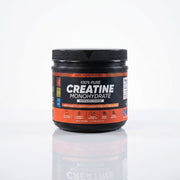
That’s why we chose to offer 100% premium creatine monohydrate.
Creatine Monohydrate is the benchmark—defined by decades of clinical research validating its effectiveness, safety, and long-term reliability.
We focused on precision.
Each serving delivers a clinically established 5 g dose, refined into a finely micronized powder for effortless mixing and consistent daily use. No blends. No fillers. No distractions.
This is creatine in its purest expression—proven, precise, and pristine.
Discover Feel More Energy™ Creatine Monohydrate
I created Feel More Energy because I lived the problem these solutions are built to fix.
There was a time in my life when my energy wasn’t matching my ambition.
My mind was sharp, but my body was drained.
My purpose was strong, but my system wasn’t supporting it.
Once I learned how to optimize my energy at the cellular level, everything changed — my clarity, my strength, my discipline, my ability to build and lead at a higher level.
Feel More Energy was born from that transformation.
If you ever have questions, want guidance, or want to connect directly, you can reach me here:

Email: ao@feelmoreenergy.com

Instagram: @realandresolaya

Website: feelmoreenergy.com
I’m building this energy movement with intention, and I’m grateful you’re here.
— Andres