


ATP Explained: Why Low Cellular Energy Is the Real Cause of Fatigue
5 min readShare
Most people think low energy is a lifestyle problem.
Too little sleep. Too much stress. Not enough motivation.
But biologically, fatigue is rarely about willpower or discipline. It’s about something far more fundamental: your cells are running low on usable energy.
At the center of that energy system is a molecule called ATP — adenosine triphosphate. ATP is not a metaphor for energy. It is energy itself. Every thought you think, every muscle contraction, every heartbeat, and every recovery process in your body is powered by ATP.
When ATP production or regeneration falls behind demand, the result isn’t just tiredness. It’s persistent fatigue, brain fog, poor performance, slow recovery, and the feeling that your body never fully “recharges,” no matter how much you rest.
Understanding ATP — and how to support it — changes how you think about energy entirely.
What ATP Really Is (And Why It Matters More Than Calories)
ATP is often called the “energy currency” of the body, but that description doesn’t go far enough.
ATP is the immediate source of energy inside your cells. Calories from food don’t power your body directly. Oxygen doesn’t either. Even sleep doesn’t create energy on its own. All of these inputs must be converted into ATP before your body can actually use them.
Here’s the critical part most people don’t realize:
Your body stores very little ATP.
At any given moment, you only have enough ATP to fuel a few seconds of activity. That means your body must continuously regenerate ATP, thousands of times per day, in every cell.
When ATP regeneration is efficient, you feel energized, focused, and resilient.
When it’s inefficient, everything feels harder.
Why Modern Life Drains ATP Faster Than We Can Rebuild It
ATP demand has always existed, but modern lifestyles push that demand far beyond what most people’s energy systems can keep up with.
Chronic stress keeps the nervous system activated and energy consumption high. Poor sleep disrupts the body’s ability to restore cellular function overnight. Inadequate oxygen delivery limits ATP production in the mitochondria. Dehydration and mineral imbalance interfere with the chemical reactions that sustain energy metabolism.
Over time, the gap between ATP usage and ATP regeneration widens. The result isn’t dramatic collapse — it’s quiet depletion.
-You wake up tired.
-You rely on caffeine.
-Your workouts feel heavier than they should.
-Your mental clarity fades earlier in the day.
This is not a character flaw. It’s a biological bottleneck.
Creatine: The Missing Link in ATP Regeneration
Creatine is often misunderstood because it’s been framed almost exclusively as a bodybuilding supplement. In reality, creatine is one of the most important compounds involved in human energy physiology.
Your body uses ATP rapidly. Once ATP releases its energy, it becomes ADP (adenosine diphosphate). To continue functioning, ADP must be converted back into ATP — and this is where creatine becomes essential.
Creatine stores high-energy phosphate groups in the form of phosphocreatine, which acts as a rapid ATP recycling system. When energy demand spikes — during physical effort, mental concentration, or stress — phosphocreatine donates its phosphate to ADP, restoring ATP almost instantly.
In simple terms:
Creatine doesn’t “give” you energy.
It allows your cells to rebuild energy faster.
This is why creatine supports not only strength and power, but also cognitive performance, recovery, and overall energy resilience.
What Science Says About Creatine and Cellular Energy
Decades of research have established creatine as one of the most studied and well-understood compounds in human performance science.
Studies published in journals such as The Journal of Applied Physiology and The Journal of the International Society of Sports Nutrition consistently show that creatine supplementation increases phosphocreatine stores in muscle and brain tissue, improving the speed and efficiency of ATP regeneration.
Research has also demonstrated benefits beyond athletics. Creatine has been linked to improved cognitive function under stress, enhanced recovery from sleep deprivation, and protection against mental fatigue — all outcomes directly tied to ATP availability.
Importantly, creatine is naturally produced in the body and obtained from food, but modern diets and high energy demands often fail to supply optimal levels for sustained performance.
From a biological standpoint, creatine isn’t an enhancement. It’s support for a system that’s already there.
Why Creatine Alone Isn’t Enough (But It’s Foundational)
ATP regeneration depends on multiple inputs working together.
Creatine helps recycle ATP, but the system still requires adequate oxygen delivery, proper sleep architecture, hydration, and mineral balance. Without these, ATP production slows — no matter how much creatine is available.
This is why energy optimization works best as a system, not a single intervention.
Supporting nasal breathing during sleep and activity improves oxygen availability, which feeds mitochondrial ATP production. Quality sleep allows the nervous system and metabolic pathways to reset overnight. Hydration and electrolytes enable the chemical reactions that sustain cellular energy.
Creatine sits at the center of this system — not as a shortcut, but as a stabilizer.
Where Feel More Energy Fits Into the Equation
This is exactly where Feel More Energy was built to operate.
Energy doesn’t come from hype, stimulants, or shortcuts — it comes from supporting the biological systems that create ATP day after day. At FME, every product is designed around that principle. We focus on cellular energy first, starting with tools and formulations that help your body regenerate ATP more efficiently instead of masking fatigue.
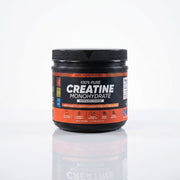
Our approach centers on clean, science-driven creatine development to support rapid ATP recycling, paired with performance breathing tools that improve oxygen delivery — one of the most overlooked factors in cellular energy production. By supporting nasal airflow, sleep quality, and recovery, we help remove the hidden bottlenecks that drain energy before creatine even has a chance to work.
The result isn’t a temporary boost.
It’s sustained, reliable energy that feels natural, focused, and resilient — the kind of energy that carries into training, work, recovery, and daily life.
Feel More Energy isn’t about doing more.
It’s about giving your cells what they need to produce energy the way they were designed to.